


 Cart
Cart
 sales@molnova.com



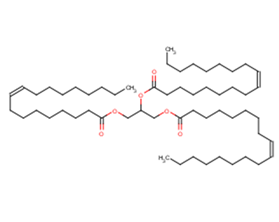
Glycerol trioleate
CAS No. 122-32-7
Glycerol trioleate( Glyceryl trioleate | Oleic triglyceride )
Catalog No. M17889 CAS No. 122-32-7
Glyceryl Trioleate has been investigated for the treatment of Adrenoleukodystrophy.
Purity : >98% (HPLC)
 COA
Datasheet
HNMR
HPLC
MSDS
Handing Instructions
COA
Datasheet
HNMR
HPLC
MSDS
Handing Instructions
| Size | Price / USD | Stock | Quantity |
| 5MG | 55 | In Stock |


|
| 10MG | 38 | In Stock |
|
| 25MG | 61 | In Stock |
|
| 50MG | 88 | In Stock |
|
| 100MG | 140 | In Stock |
|
| 500MG | 474 | In Stock |
|
| 1G | Get Quote | In Stock |
|
Biological Information
-
Product NameGlycerol trioleate
-
NoteResearch use only, not for human use.
-
Brief DescriptionGlyceryl Trioleate has been investigated for the treatment of Adrenoleukodystrophy.
-
DescriptionGlyceryl trioleate is a a fat-mimicking material that when mixed with glyceryl trierucate forms Lorenzo's oil. Lorenzo's oil has been used to reduce the saturated VLCFA level in the plasma of X-ALD patients.
-
In VitroRT-PCR Cell Line:Tel‐E6E7 Concentration:20 μM Incubation Time:48 h Result:Reduced the IL-6 expression and ROS generation.
-
In Vivo——
-
SynonymsGlyceryl trioleate | Oleic triglyceride
-
PathwayApoptosis
-
TargetApoptosis
-
RecptorOthers
-
Research AreaOthers-Field
-
Indication——
Chemical Information
-
CAS Number122-32-7
-
Formula Weight885.45
-
Molecular FormulaC57H104O6
-
Purity>98% (HPLC)
-
SolubilityIn Vitro:?DMSO : 100 mg/mL (112.94 mM)
-
SMILESCCCCCCCCC=CCCCCCCCC(=O)OCC(COC(=O)CCCCCCCC=CCCCCCCCC)OC(=O)CCCCCCCC=CCCCCCCCC
-
Chemical Namepropane-1,2,3-triyl trioleate
Shipping & Storage Information
-
Storage(-20℃)
-
ShippingWith Ice Pack
-
Stability≥ 2 years
Reference
molnova catalog



related products
-
SPOP-IN-6lc
SPOP-IN-6lc is a potent SPOP inhibitor with multiple roles in cancer, oncostatic in a variety of tumors, but functions as an oncogene in renal cancer.SPOP-IN-6lc can be used to study cell signaling and apoptosis.
-
Alexidine dihydrochl...
Alexidine dihydrochloride has antifungal and antibiofilm activity against a diverse range of fungal pathogens.
-
AAPK-25
AAPK-25, a potent and selective dual inhibitor of Aurora/PLK, causes mitotic delay and cell arrest in prometaphase, via phosphorylation of the biomarker histone H3Ser10, followed by a surge in apoptosis.
